
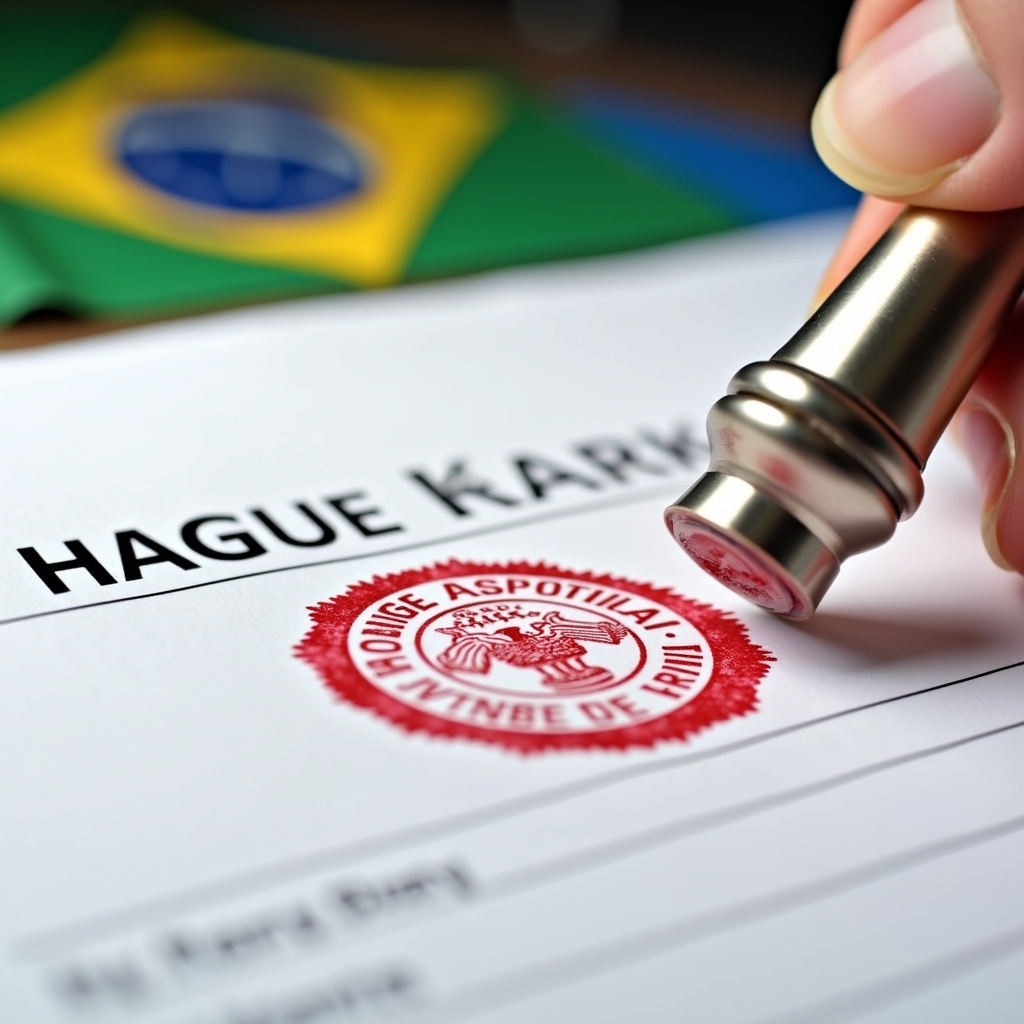
Moving to a new country is an exhilarating chapter in anyone’s life, especially when that country is Paraguay – a nation brimming with untapped potential, particularly for Brazilian entrepreneurs and families seeking a new horizon. The allure of a simpler life, lower cost of living, and promising business environment makes Paraguay an increasingly popular destination. However, amidst the excitement of planning your new life, one crucial administrative hurdle often emerges: the proper legalization of your documents. Navigating the bureaucratic maze of international document recognition can seem daunting, but fear not. This comprehensive guide, brought to you by VivaParaguay360, is designed to demystify the process of legalizing your Brazilian documents for use in Paraguay. We will delve into the critical role of the Hague Apostille, providing you with a step-by-step roadmap to ensure your transition is as smooth and stress-free as possible. Understanding this process is not merely a bureaucratic formality; it’s the foundation upon which your new life, business, or educational pursuits in Paraguay will be built.
Understanding the Hague Apostille: Your Gateway to International Recognition
For many years, the process of getting a document from one country recognized in another was a lengthy and often frustrating ordeal. It typically involved multiple layers of authentication: first by a national authority, then by the foreign ministry, and finally by the consulate or embassy of the country where the document was to be used. This multi-step “chain legalization” was a significant barrier to international mobility and commerce.
Thankfully, the landscape dramatically changed with the introduction of the Hague Convention Abolishing the Requirement of Legalisation for Foreign Public Documents, signed in 1961 and implemented by over 120 countries worldwide. Brazil’s adherence to this Convention in 2016, through the National Council of Justice (CNJ) Resolution No. 228/2016, revolutionized the process for Brazilians. The central innovation of the Convention is the “Hague Apostille” (or simply “Apostille”). This is a standardized certificate that authenticates the origin of a public document. It verifies the authenticity of the signature on the document, the capacity in which the person signing the document acted (e.g., as a notary, government official), and, where appropriate, the identity of the seal or stamp which the document bears. Critically, both Brazil and Paraguay are signatory states to the Hague Convention. This means that a document apostilled in Brazil is automatically recognized as legal and valid in Paraguay, eliminating the need for any further diplomatic or consular legalization. It’s a single, universally accepted certification that significantly streamlines cross-border legal recognition, making your move to Paraguay considerably easier from a documentary perspective. Source: Conselho Nacional de Justiça (CNJ)
Essential Documents for Relocation and Residency in Paraguay
The exact set of documents you’ll need to legalize will depend heavily on your specific objectives in Paraguay. Are you applying for temporary residency, permanent residency, starting a business, or enrolling your children in school? Each scenario will have its own precise requirements. However, there’s a common core of documents frequently requested across various processes:
- For Personal Identification and Civil Status: Your Birth Certificate (Certidão de Nascimento) is fundamental. If you are married, your Marriage Certificate (Certidão de Casamento) is essential. For individuals who are divorced, a Divorce Decree (Sentença de Divórcio) is necessary. These documents confirm your identity and marital status, which are crucial for any official registration in Paraguay.
- For Education and Professional Recognition: If you plan to continue your studies, seek employment requiring specific qualifications, or validate your professional credentials, your Diplomas (Diplomas), Academic Transcripts (Históricos Escolares), and any professional licenses or certificates will need to be apostilled. For families relocating with children, school records (Histórico Escolar) will be required for enrollment in Paraguayan schools.
- For Financial and Business Purposes: When establishing a business or proving financial solvency for residency, documents like bank statements (Extratos Bancários), proof of income (Comprovantes de Renda), and potentially company registration documents (Contrato Social or similar) will be necessary.
- For Security Clearances: A Criminal Record Certificate (Certidão de Antecedentes Criminais) issued by the Brazilian Federal Police (Polícia Federal) is almost universally required for residency applications. This document confirms your legal standing in Brazil.
- Other Specialized Documents: Depending on your situation, you might also need to apostille Powers of Attorney (Procurações), medical certificates, or specific government-issued permits.
Our strongest advice is to always obtain a precise list of required documents directly from the Paraguayan institution you will be dealing with (e.g., Dirección General de Migraciones for residency, Ministerio de Industria y Comercio for business registration) or consult with a specialized lawyer or immigration consultant in Paraguay. This proactive approach will save you time and prevent costly mistakes. Source: Dirección General de Migraciones (DGM) – Paraguay
The Step-by-Step Apostille Process in Brazil
Embarking on the Apostille process in Brazil is systematic and, once understood, quite manageable. Here’s a detailed breakdown:
- Gather Original Documents: This is the foundational step. You must obtain the original versions of every document you intend to use in Paraguay. For civil documents like birth or marriage certificates, this means requesting updated copies (2ª Via) from the respective “cartório de registro civil” (civil registry office) in Brazil. Ensure these originals are recent, typically issued within the last 6 months to a year, as some Paraguayan authorities prefer fresh documents. For diplomas, the original university-issued document is required.
- Verify Document Integrity: Before proceeding, inspect all your documents carefully. They must be legible, intact, and free from any alterations, tears, or smudges that could raise questions about their authenticity. The notary performing the Apostille will scrutinize these aspects.
- Sworn Translation (Crucial for Recognition): While Portuguese and Spanish share similarities, for formal recognition in Paraguay, most documents will require a sworn translation into Spanish. This translation must be performed by a “tradutor público e intérprete comercial” (sworn translator) registered with a “Junta Comercial” (Board of Trade) in Brazil. After the translation is completed, both the original document and the sworn translation itself will need to be apostilled. The sworn translation is considered a public document and thus also requires authentication. Often, the notary will affix a separate Apostille to the original document and another to the sworn translation. Discuss the best approach with your chosen “cartório” or a specialized consultant. This dual apostille ensures both the source document and its official translation are recognized internationally.
- Application at an Authorized Notary Public (Cartório): With your original documents and their sworn translations (if applicable) in hand, proceed to any “cartório” (notary public office) in Brazil that is authorized by the CNJ to issue the Hague Apostille. Most major cartórios across Brazil offer this service. The process involves presenting your documents, filling out a simple request form, and paying the applicable fee. The notary public will verify the signatures and seals on your documents against official registries and then affix the Apostille certificate. The cost of an Apostille varies by Brazilian state, so it’s advisable to check the current rates beforehand.
- Digital Verification and Record-Keeping: Once the Apostille is affixed, it will typically include a unique identification number, a QR code, and a digital verification link. This allows any interested party, including Paraguayan authorities, to verify the authenticity of the Apostille online through the official platform of the Brazilian National Council of Justice (https://www.cnj.jus.br/servicos/apostila-da-haia/consulta-publica/). Make sure to keep copies of all your apostilled documents and their respective Apostille certificates for your records.
Key Considerations for a Seamless Process
Beyond the procedural steps, several practical considerations can significantly impact the success and timeliness of your document legalization:
- Document Validity Periods: Be acutely aware of expiry dates. Documents like criminal record certificates (Certidão de Antecedentes Criminais) usually have a limited validity, often 90 days from the date of issue. Ensure that your apostilled documents are well within their validity period when you submit them to Paraguayan authorities. Planning ahead to obtain these documents just before the Apostille process is vital.
- Institution-Specific Requirements: Never assume that a generic set of apostilled documents will suffice for all purposes. Different Paraguayan institutions (e.g., Dirección General de Migraciones, universities, banks, government ministries) may have specific, sometimes nuanced, requirements regarding document formats, additional attestations, or preferred presentation. Always obtain a definitive list directly from the requesting entity.
- The Value of Professional Guidance: While this guide provides a comprehensive overview, the complexities of international relocation, especially for business ventures or intricate family situations, can warrant professional assistance. Legal or relocation consultants specializing in Brazil-Paraguay migration can offer invaluable expertise, navigating specific nuances, ensuring compliance, and even managing the entire document legalization process on your behalf. This can save you significant time, reduce stress, and prevent potential delays or rejections due to technicalities.
- Time Management and Planning: The Apostille process itself is often quick, but the preparatory steps—obtaining original documents, securing sworn translations, and addressing any unforeseen issues—can take time. Factor in several weeks, or even a couple of months, into your relocation timeline for document preparation and legalization. Rushing this process can lead to errors and unnecessary stress.
- Digital Copies and Backups: Once your documents are apostilled, make digital scans of everything and store them securely. While authorities will require physical originals, having digital backups is crucial for your records and for quickly providing information if needed.
Paraguay: A Land of Opportunity for Brazilians
With your documents meticulously legalized, the path is clear to embrace the myriad opportunities that await you in Paraguay. VivaParaguay360 champions this nation as a prime destination for Brazilians, and for good reason. For entrepreneurs, Paraguay’s burgeoning economy, simplified tax regime (with one of the lowest tax burdens in the region), and strategic location within Mercosur offer fertile ground for new ventures and expansion. The potential for “renda extra no Paraguai” (extra income in Paraguay) is not just a dream but a tangible reality for those willing to invest and innovate. For families considering “relocação familiar” (family relocation), Paraguay offers an attractive combination of a welcoming culture, a lower cost of living compared to many Brazilian cities, and a tranquil environment. Education, healthcare, and daily expenses are often more accessible, allowing families to achieve a higher quality of life. Our blog aims to be your ultimate guide, providing insights into every aspect of “living in Paraguay,” from navigating local customs and finding suitable housing to understanding investment opportunities and integrating into the vibrant Paraguayan lifestyle. Source: Ministério das Relações Exteriores (MRE) – Brazil
Conclusion
The journey of legalizing your Brazilian documents for use in Paraguay, facilitated by the Hague Apostille, is a fundamental and empowering step in your relocation. Far from being a mere bureaucratic hurdle, it is an essential foundation that ensures your legal and personal standing is recognized and respected in your new home. By diligently following the steps outlined in this guide, understanding the requirements, and seeking professional assistance when necessary, you can approach your move to Paraguay with confidence and peace of mind. The opportunities for personal growth, entrepreneurial success, and a fulfilling family life in Paraguay are immense. Take this first crucial step, get your documents in order, and prepare to unlock the full potential of your new life in this dynamic South American nation.