
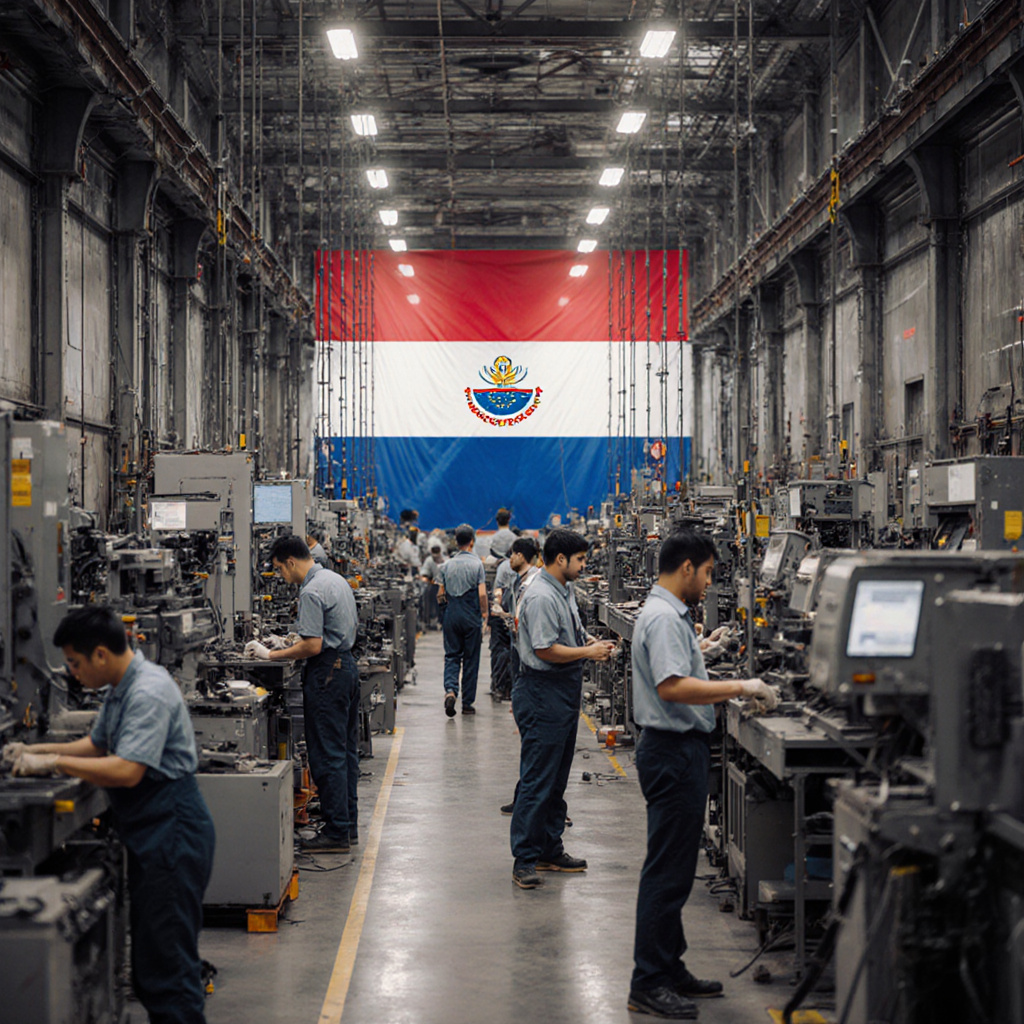
How the ‘Maquila’ System Works in Paraguay
Paraguay, often referred to as the “Heart of South America,” has been steadily gaining recognition as an attractive destination for foreign investment and entrepreneurial ventures. Its strategic location, stable macroeconomic environment, amazingly low tax system, and competitive operational costs have positioned it as a rising star in the region. Among the various incentives designed to boost its industrial sector and integrate it into global value chains, the ‘Maquila’ system stands out as a powerful engine for economic growth. For Brazilian entrepreneurs, families considering relocation, and anyone looking for extra income opportunities, understanding the Maquila regime is crucial. This comprehensive guide will delve into the intricacies of this system, outlining its operational mechanisms, compelling benefits, and why it might be the perfect gateway for your next business endeavor in Paraguay.
What is the Maquila System? A Definition
At its core, the Maquila system in Paraguay is a special regime that allows companies to temporarily import raw materials, inputs, and components (without paying import duties or taxes) into the country. These materials are then processed, transformed, assembled, repaired, or serviced within Paraguay, and the resulting finished or semi-finished goods are re-exported. The crucial aspect is that these processed goods must be destined for foreign markets. The name “maquila” itself refers to the portion of grain that a miller kept as payment for grinding, symbolizing the value added by the processing work. In the modern context, it refers to the value added by the manufacturing or service process in Paraguay before re-export. This system is governed by Law No. 1064/97 “De la Industria Maquiladora de Exportación” (Law of the Export Maquiladora Industry) and its subsequent regulatory decrees.
Unlocking Business Potential: The Key Benefits of Maquila
The attractiveness of the Maquila system lies primarily in its robust package of incentives, meticulously designed to foster industrial development and attract foreign capital.
- Unified 1% Tax on Value Added: This is arguably the most significant benefit. Instead of standard corporate income tax (IRE) and other levies, Maquila companies pay a single 1% tax on the value added to the goods or services within Paraguay. This means the tax is applied only to the portion of the product’s value created in Paraguay, not on the total sales value. This dramatically reduces the tax burden compared to conventional export operations.
- Tax Exemptions on Imports: Companies operating under the Maquila regime are exempt from all taxes and duties on the temporary importation of raw materials, inputs, machinery, equipment, tools, and spare parts necessary for their production process. This includes customs duties, Value Added Tax (VAT), and other specific taxes, as long as these items are used for products destined for export. This significantly lowers initial investment and operational costs.
- VAT Exemption on Domestic Purchases: If a Maquila company purchases raw materials, inputs, or services from local Paraguayan suppliers for its export production, these transactions are also exempt from VAT. This fosters local supply chains and further reduces costs.
- Access to MERCOSUR and Other Markets: Paraguay is a full member of MERCOSUR, which provides preferential access to a vast market comprising Brazil, Argentina, Uruguay, and other associated countries. Goods produced under the Maquila system can often benefit from these agreements, facilitating market entry and expansion.
- Competitive Operating Costs: Beyond tax incentives, Paraguay offers competitive labor costs, abundant and affordable energy (hydroelectric power), and lower operational overheads compared to many neighboring countries. This combination creates a highly attractive environment for manufacturing and service industries.
- Simplified Bureaucracy: The Maquila system aims to streamline administrative processes, offering a relatively straightforward framework for establishing and operating an export-oriented business.
How Does the Maquila System Work in Practice?
The implementation of the Maquila system involves several structured steps, ensuring compliance and maximizing benefits.
- Approval of a Maquila Program: A company interested in operating under this regime must submit a “Maquila Program” to the National Council of Maquila Export Industries (Consejo Nacional de Industrias Maquiladoras de Exportación – CNIME). This program outlines the project’s details, including the types of products, production processes, investment plans, job creation projections, and the estimated value added in Paraguay.
- CNIME Evaluation and Resolution: The CNIME, an inter-institutional body responsible for promoting and regulating the Maquila industry, evaluates the proposed program. Upon approval, a Resolution is issued, officially granting the company “Maquiladora” status.
- Maquila Contract: Once approved, the Maquiladora enters into a contract with the Paraguayan government (represented by CNIME) detailing the terms and conditions of its operation, including its obligations and rights under the Maquila law.
- Temporary Importation: With the program approved, the company can proceed with the temporary importation of raw materials, inputs, machinery, and equipment. These items are registered and monitored by customs to ensure they are used exclusively for the approved Maquila program.
- Production and Processing: The imported goods undergo the agreed-upon manufacturing, assembly, or service processes within the Maquiladora’s facilities in Paraguay.
- Re-exportation: The finished products are then re-exported to international markets. Strict customs controls ensure that the re-exported goods correspond to the processed imported materials. A portion of the production (up to 10%) may be sold in the local market under specific conditions and paying relevant national taxes.
Who Can Benefit and Which Industries Thrive?
The Maquila system is particularly advantageous for:
- Foreign Investors: Companies looking to establish a manufacturing base in South America with a focus on export.
- Brazilian Entrepreneurs: Given Paraguay’s proximity and MERCOSUR membership, Brazilian businesses can leverage the Maquila system to reduce production costs and enhance their competitiveness in regional and global markets. It presents a tangible opportunity for “renda extra” (extra income) through efficient production and access to new markets.
- Industries with High Export Potential:
- Textile and Garment Industry: Producing clothing, fabrics, and other textile products.
- Automotive Parts: Manufacturing components for vehicles, often supplying assembly plants in neighboring countries.
- Electronics and Electrical Appliances: Assembly or manufacturing of electronic devices.
- Food Processing: Transforming agricultural raw materials into processed food products for export.
- Services: While less common than manufacturing, certain services (e.g., call centers, software development) can also operate under the Maquila regime if they are export-oriented and add value within Paraguay.
Maquila’s Impact on Relocation and Entrepreneurship
For families considering relocation to Paraguay, the growth of the Maquila sector translates into significant opportunities. The establishment of new Maquila factories creates employment, both directly in manufacturing and indirectly in related services. This economic dynamism contributes to a more robust job market and a wider range of business opportunities for entrepreneurs looking to provide services or supply goods to the Maquila ecosystem. Brazilian entrepreneurs, in particular, find a welcoming environment, with shared cultural ties and a clear legal framework for establishing and growing their ventures. The “guías para empreendedores brasileiros” (guides for Brazilian entrepreneurs) aspect of VivaParaguay360 aligns perfectly with exploring these industrial incentives.
Conclusion: A Gateway to Growth in Paraguay
The Maquila system is more than just a tax incentive; it is a comprehensive framework designed to integrate Paraguay into the global economy, foster industrial development, and attract significant foreign investment. Its straightforward mechanisms, combined with substantial tax exemptions and Paraguay’s inherent competitive advantages, make it an incredibly appealing option for businesses targeting export markets. For entrepreneurs and investors worldwide, particularly those from Brazil, the Maquila regime offers a clear pathway to reduced operational costs, enhanced profitability, and strategic access to the South American market. As Paraguay continues its trajectory of economic growth, understanding and leveraging the Maquila system will be key to unlocking success in this dynamic nation.
Sources:
- Paraguayan Law No. 1064/97 “De la Industria Maquiladora de Exportación” (Available on official government legislative databases, e.g., Leyes.com.py).
- Ministerio de Industria y Comercio (MIC) – National Council of Maquila Export Industries (CNIME) website: https://www.mic.gov.py/v1/content/cnime
- Various investment guides and reports from organizations like Rediex (Red de Inversiones y Exportaciones del Paraguay) and other international business consulting firms specializing in Paraguay.